
Getting around Rome by public transport
Rome has an integrated public transport system: the same tickets are valid on metro, buses, trams and metropolitan trains within the city.
Tickets & fares
- Standard ticket (BIT): €1.50, valid for 100 minutes from first validation. Within this time you can use buses, trams, and one metro ride.
- ROMA24H: € 8.50, valid 24 hours from first validation
- ROMA48H: € 15.00, valid 48 hours from first validation
- ROMA72H: € 22.00, valid 24 hours from first validation
Tickets must be validated: stamp them in the yellow machines on buses/trams or insert them at metro turnstiles.
Children up to 10 years old travel for free.
Where to buy tickets:
- At tabacchi shops (look for the blue “T” sign)
- At newsstands, bars, and vending machines in metro stations or main bus stops
NEW!
TAP&GO (contactless): a very convenient option! You can simply tap your credit or debit card at metro turnstiles or on the red readers onboard. Just look for the symbol . Taps made to change between different means of transport (bus-metro/railway, metro/railway-bus and bus-bus), if made within the validity period of the ticket, are considered as one single tap and there will be no further charge. Make sure to always use the same card (and same device) during the day: in this way you will activate the best fare feature (daily cap € 8.50, which is cheaper than 6 BIT tickets).
Tourist Passes
ROMA PASS
Roma Pass it’s the official tourist pass of Rome, it combines museums and archeological areas entries with unlimited public transport for 48 or 72 hours.
- Roma Pass 48 hours: € 38 (it includes 1 free entry + reductions in the other museums)
- Roma Pass 72 hours: € 62.90 (it includes 2 free entries + reductions in the other museums)
For a list of all the museums, archeological areas and experiences included, please visit the official website: https://www.romapass.it/en/home
Things to know before buying a Roma Pass:
- Most of the museums and archaeological sites are free for under 18 yo;
- up to 10 yo children can travel for free on public transport;
- Colosseum and Borghese Gallery need a further reservation on the 2 official websites;
- Vatican Museums & Sistine Chapel are not included in the Roma Pass.
Tip: check the prices of the skip the line entrance tickets of the museums/sites you want to visit first!
Metro (Subway)
Rome’s metro has 3 lines:
- Line A (red)
- Line B (blue)
- Line C (green)
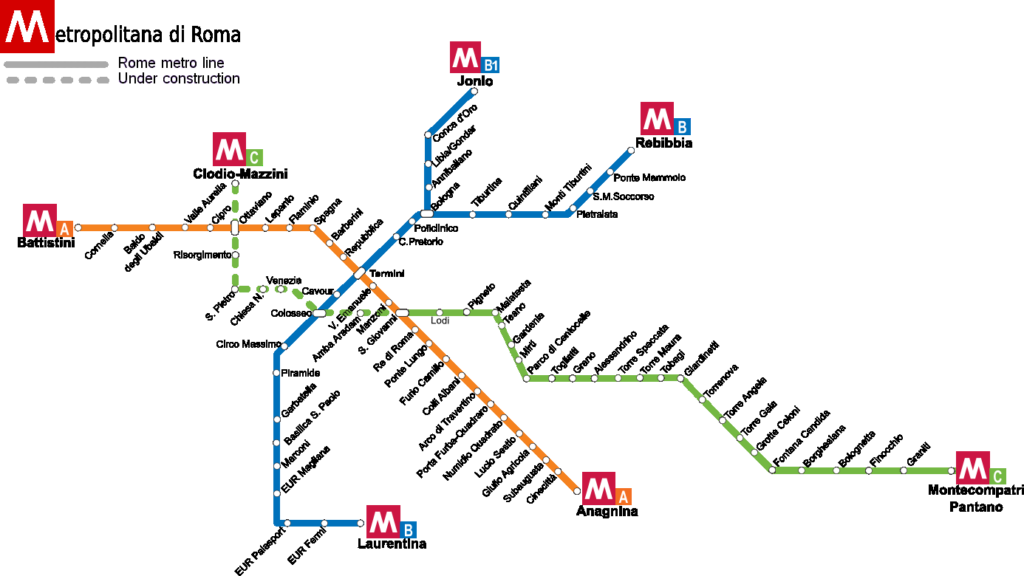
Lines A and B cross at Termini Station (the main train station).
Opening times:
- Sun–Thu: 5:30 am – 11:30 pm
- Fri–Sat: 5:30 am – 1:30 am
⚠️ Important notice: Rome is a very safe city. However, like in many large cities, pickpockets can be found—especially on the metro during rush hours, when it’s more crowded. They are often small groups working together and not easy to recognize.
The best way to avoid any problem is simply to stay aware:
- Keep your backpack in front of you.
- Keep a hand on your bag or pockets.
- Avoid displaying valuables.
👉 Tip: When waiting for the metro, walk towards the beginning or the end of the platform. It’s usually less crowded—and therefore safer and more comfortable.
Buses & trams
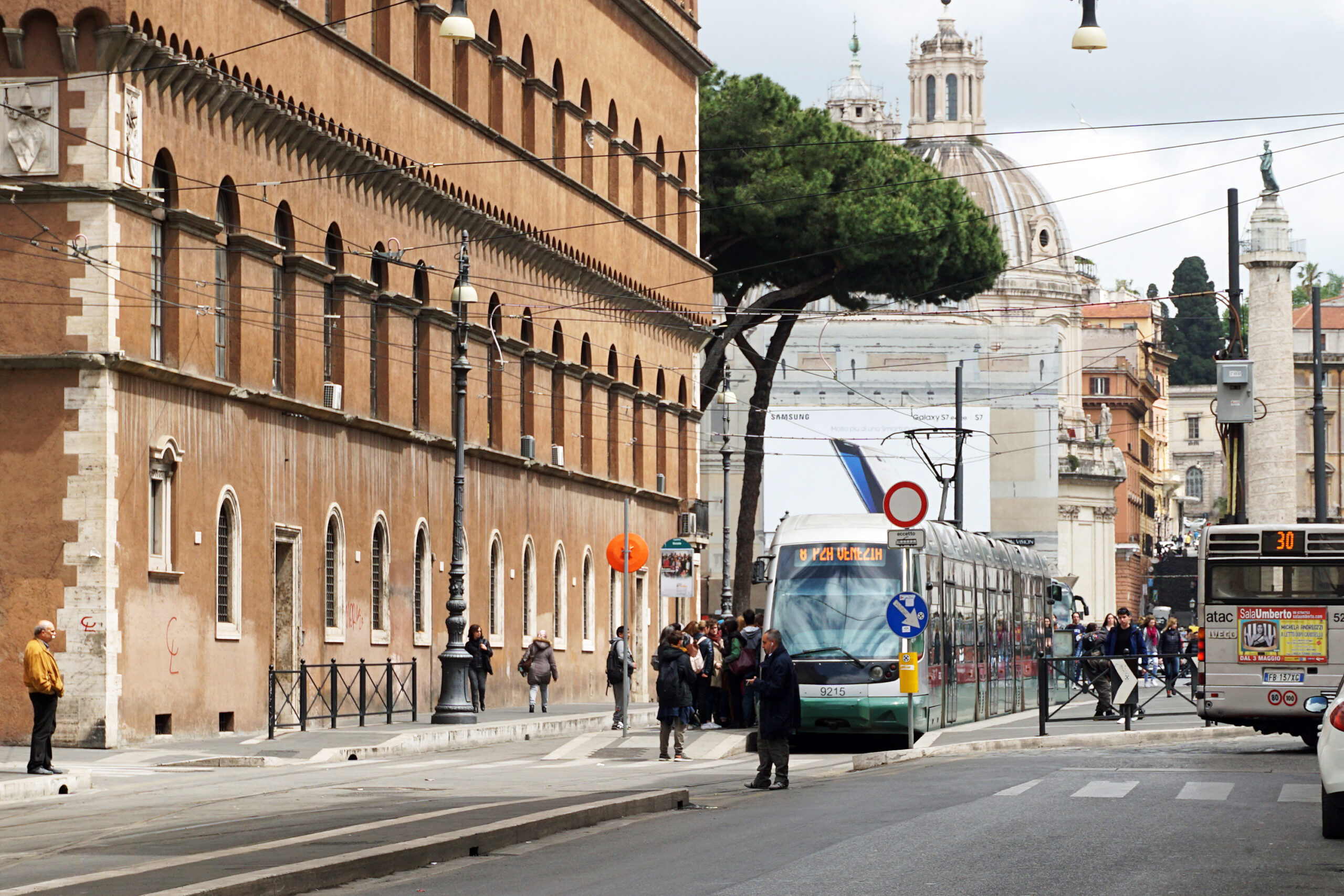
Rome has an extensive bus and tram network, operating from 5:30 am to midnight. Night buses run on some routes after midnight.
While the number of lines is impressive, delays and long waits are also quite common. To be fair, the service has improved recently thanks to new buses and dedicated bus lanes (corsie preferenziali). If you can avoid rush hours and you enjoy slow travel and people-watching, using buses in Rome can be quite an experience!
How to read bus stops
- Each stop lists the bus numbers and their routes.
- The stop where you are is usually marked in red.
- The waiting times shown on electronic displays are fairly reliable.
👉 I recommend downloading apps such as Citymapper to move around more easily.
Useful bus routes
- 40 Express: Termini → Lungotevere in Sassia (near St. Peter’s Basilica).
Fast route with few stops, including Piazza Venezia, Largo Argentina (Pantheon), Piazza Navona/Campo de’ Fiori. - 64: Termini → Stazione San Pietro.
Same route as 40 Express, but with more stops. - H: Termini → dei Capasso.
Great way to reach Trastevere. Stops include Piazza Venezia, Largo Argentina, Ponte Garibaldi, Viale Trastevere. - 87: Colli Albani → Viale Giulio Cesare.
Connects the San Giovanni neighborhood to the historic center (Colosseum, Piazza Venezia, Piazza Navona, Pantheon, Castel Sant’Angelo). - 81: Malatesta → Crescenzio/Risorgimento.
Also connects San Giovanni to the historic center (Colosseum, Circus Maximus, Piazza Venezia, Piazza Navona, Pantheon, Castel Sant’Angelo, Vatican). - 118: Appia/Villa dei Quintili (circular route).
From Piazza Venezia, Colosseum and Circus Maximus, it runs along the ancient Appian Way to the Catacombs. - 63: Piazza Monte Savello → Rossellini.
From Tiber Island via Via Arenula to Villa Borghese and Galleria Borghese, passing by Piazza Venezia and the Trevi Fountain.
💡 Since most of our apartments are located in the city center, you may not need to use buses at all during your stay. Still, it’s good to know how the system works!
Taxis in Rome
Official taxis in Rome are white with a “TAXI” sign on the roof.
- Always make sure the meter is visible and running when you get in.
- Some drivers may be unwilling to take short rides or may try to overcharge tourists—these are the ones to avoid. If this happens, simply step out and look for another taxi.
- Fares depend on distance, traffic, and time of day, which is why checking the meter is essential.
Flat Fees
The only official flat rates apply to and from the airports, but only if your pickup or drop-off is within the Aurelian Walls (the historic city center). For example, if you are staying in the San Giovanni neighborhood, the flat fee does not apply. Official fees here: https://romamobilita.it/it/muoversiaroma/taxi
Booking a Taxi
It’s always safer and easier to book a taxi through the main companies using their official apps:
- itTaxi
- FreeNow
They work like Uber, but usually cost less.
Uber in Rome
If you can’t find a taxi via app or at a taxi stand, Uber is another option. However, in Italy only Uber Black is available, meaning licensed drivers with higher-end cars. The service is more comfortable, but more expensive than a regular taxi.
✅ Tip for your stay:
For short distances in the city center, walking is often the fastest (and most beautiful!) way to get around. Rome’s historic center is not very large, yet it is filled with incredible treasures waiting to be discovered.
Use buses or the metro mainly for longer trips or when you’re tired—otherwise, put on comfy shoes and get ready to walk! Getting lost in the labyrinth of little alleys is truly the best way to experience Rome.
💡 Extra tip: If you see a large doorway open while exploring, take a quick peek inside. Many private courtyards in Rome are surprisingly beautiful and full of charm.
Photo by Mariordo – Mario Roberto Duran Ortiz (CCBY-SA 4.0)